
This is an old revision of the document!
Table of Contents
The Influence of Burpee on Endurance and Short-Term Memory of Adolescents
Reference
Abstract
Aim—The purpose of this study was to assess the effect of the Burpee exercise on the endurance and short-term memory of adolescents aged 15–16 years. Methods—The experiment was performed in a coeducational school in Kirov (Russia). The four-month study involved 52 adolescents of both genders. During the study period, 30 physical education lessons were held in each class. Adolescents from the control group were involved in a typical program (also aimed at improving endurance), and adolescents from the experimental group additionally performed the Burpee exercise. Endurance in adolescents was assessed by means of an “all-out” Running 2000 m test, and short-term memory was assessed by means of the Jacobs test (tests were performed before and after the programs). Results—An analysis of variance revealed an interaction effect (F = 28.733, ηp2 = 0.578 and p < 0.001, and F = 104.353, ηp2 = 0.676 and p < 0.001 for the Running 2000 m test and the Jacobs test, respectively). The control group improved by 1.9% (p > 0.05) in the Running 2000 m and by 5.5% (p > 0.05) in the Jacobs test. In the experimental group, both improved significantly by 8.6% (p < 0.05) in the Running 2000 m test and by 26.0% (p < 0.05) in the Jacobs test. Conclusion—The Burpee exercise could be included in physical education classes to improve endurance and short-term memory in 15–16-year-old.
Keywords: exercise, distance-running, cognition, youth 1. Introduction
Almost everybody shares the aim of improving their physical and cognitive abilities. In particular, teachers and coaches are always in search of methods—including exercises—that are as effective as possible to achieve this aim. Among the most well-known specific exercises is the Burpee, which was invented by the America physiologist Royal Huddleston Burpee in New York in the late 1930s [1]. The Burpee exercise has become so popular that people from all over the world take part in online challenges held over the Internet with the goal of performing the maximum number of repetitions during a certain time interval. The Burpee is an exercise that places a particularly high burden on the metabolic machinery due to the large group of muscles involved in its practice [1]. The Burpee exercise can be performed anywhere and without any specific gym tool [2,3].
If performed with adequate technique, the Burpee exercise can support the safe development of the muscles of adolescents as it is easily performed with one’s own weight. Strength training in adolescence is an object of discussion because of its alleged risk to harm a person’s growth and development [4]. In fact, there is some controversy surrounding the appropriateness of performing resistance exercises in adolescents. There is a widely held inaccurate belief that strength training, when performed during puberty and/or adolescence, can hamper one’s growth by damaging growth plates. However, strength training is safe and does not negatively impact the growth and maturation of pre- and early-pubertal individuals [5,6]. Its benefits include an increase in strength, speed, and power; improved body composition; stronger bones; and a reduction in injury rates [7,8].
Despite its worldwide spread, there are no scientific studies showing the Burpee exercise as an effective element of physical activity for adolescents. It is likely that such an activity will be more effective within an individual approach for each student [9,10]. Furthermore, the scientific literature shows that physical activity has a positive effect on the cognitive performance of adolescents of different ages [11], in particular at 15–16 years of age, viz., when attending 10th grade or the first year of college [12,13,14].
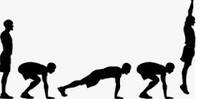
Considering the sensitive periods of development of physical qualities such as strength, speed-strength abilities and endurance, the age of 15–16 years was determined to be best for the study (this corresponds to the 9th grade in regular school progression). At this age, there is a rather intensive development of the muscle mass of adolescents and notable development of most physical qualities, especially endurance [15,16]. If at primary school age, a differentiated approach and coordination training prevail, later, at secondary school age, an individual approach is more often used. The research hypothesis was that adding the Burpee exercise to traditional physical education lessons at school would lead to an improvement to both endurance and short-term memory. The aim of this study was to assess the effect of the Burpee exercise on the variables of endurance and short-term memory in adolescents aged 15–16 years. The implicit reasoning supporting our aim was that exercises such as the Burpee are different from many other single gym exercises. Rather, the Burpee exercise has, in our opinion, a double nature (read Section 2.3 Execution Technique below). Namely, the Burpee exercise appears to be particularly demanding of metabolic energy due to its fast-paced jumping and weight-bearing stages. Furthermore, its correct execution requires continuous and conscious motor control over its different stages, which are very different from each other and involve all the main body segments (thus, maybe, in some way, mirroring short-term memory capability [17]). It is noteworthy to recall that Burpee training was already deemed to be associated with more positive psychological responses than other commonly practiced high-intensity exercises [18]. Therefore, we expected that matching training time between an experimental group and a control group and adding the Burpee exercise to a usual physical education program would further improve both endurance and short-term memory.
2. Materials and Methods
2.1. Participants
Fifty-two adolescents aged 15–16 years (height 167.4 ± 8.9 cm, mass 56.2 ± 8.5 kg), who studied in a regular Russian school in the city of Kirov took part in this study. They were boys and girls who studied at grade 9 (in two different classes: 9a and 9b). During the study period, physical education classes were set so that other physical activities of the students did not affect the test results. That is, the students who took part in the study did not exercise additionally. The students were divided into a control group (CG) and an experimental group (EG). Regardless of gender and level of physical fitness, only those adolescents who were admitted to physical education lessons by a doctor without any of the following restrictions for health reasons took part in the study. Students’ non-inclusion criteria were: joint problems (especially at knee and hip), chronic heart disease or high blood pressure, and being excessively overweight (more than 30% of the normal weight). In total, out of 32 students studying in 9a, 25 completely healthy—as assessed by the school’s physician—students (13 boys and 12 girls) were admitted to the study as the CG. In the same way, out of 33 students studying in 9b, 27 students (13 boys and 14 girls) took part in the study as the EG. All procedures met the ethical standards of the 1964 Declaration of Helsinki and were approved by the local university ethics committee. Informed consent was obtained from all the parents of the adolescents included in the study. Students were free to withdraw from the experiment at any time. 2.2. Procedure
Research was performed in a co-educational school in Kirov (Russia) from 1 September to 30 December 2021. School physical education lessons took place twice a week, lasting 45 min each. All lessons were monitored. A total of 30 physical education lessons were performed, always at the same time and on the same weekdays. A usual physical education program for students at grades 1–11 was administered to the CG [19]. The purpose of the physical education curriculum was to form the basics of a healthy lifestyle among school students and the development of creative independence through the development of motor activity. The realization of the purpose of the curriculum correlated with the solution of the following educational tasks:
Improving knowledge on the importance of physical culture for strengthening human health and on its positive impact on human development (physical, intellectual, emotional and social).
Strengthening the health of schoolchildren through the development of physical qualities and increasing the functionality of the life-supporting systems of the body.
Improving vital skills and abilities through learning outdoor games, physical exercises and technical actions from basic sports.
The experimental group followed the same program but additionally performed the Burpee exercise in each lesson (in Table 1, differences from the control group, which was engaged in the ordinary program for the whole duration of each lesson, can be observed; i.e., lessons probably resulted in a few differences among the groups in terms of training volume).