Table of Contents
VO2 Max
What Is VO₂ Max?
VO₂ max (maximal oxygen uptake) is the maximum amount of oxygen your body can use during intense exercise. It reflects how efficiently your heart, lungs, blood vessels, and muscles work together to deliver and use oxygen for energy production.
It is usually expressed as:
Millilitres of oxygen per kilogram of body weight per minute (mL/kg/min)
The higher your VO₂ max, the greater your aerobic fitness and endurance capacity.
What Does VO₂ Max Represent?
VO₂ max depends on several physiological systems:
- Heart function – How much blood your heart can pump per beat (stroke volume).
- Lung function – How effectively oxygen enters your bloodstream.
- Blood oxygen transport – Haemoglobin levels and circulation efficiency.
- Muscle efficiency – How well your muscles extract and use oxygen.
It is often considered the gold standard measure of cardiovascular fitness.
How Is VO₂ Max Measured?
1. Laboratory Testing (Direct Measurement)
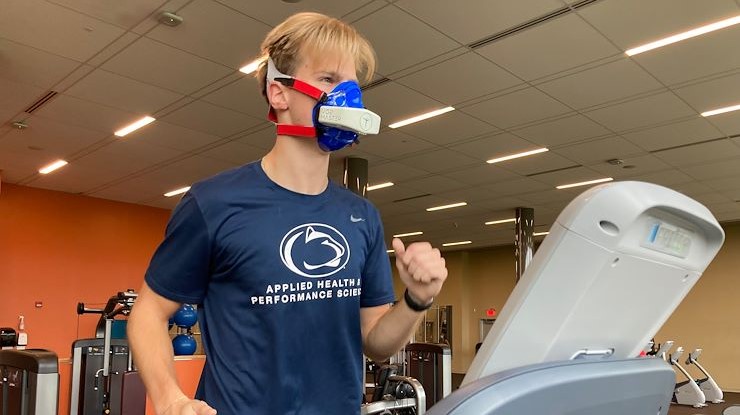
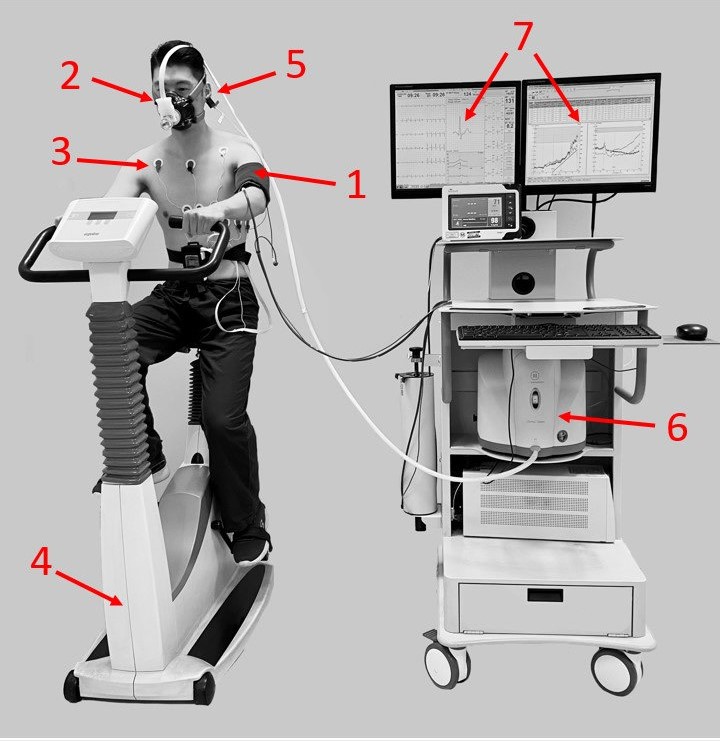
The most accurate method is a graded exercise test (often called a cardiopulmonary exercise test or CPET).
Performed on a treadmill or stationary bike
Intensity increases gradually
You wear a mask that measures oxygen intake and carbon dioxide output
Test continues until exhaustion
This provides a direct and precise VO₂ max value.
2. Submaximal Fitness Tests (Estimated)
If lab testing is not available, VO₂ max can be estimated using:
Step tests
Cooper 12-minute run test
Shuttle (beep) test
Cycle ergometer tests
These use heart rate and workload to estimate VO₂ max.
3. Wearable Devices
Many modern fitness watches estimate VO₂ max using:
Heart rate data
Pace/speed
Personal details (age, weight, sex)
These are convenient but less accurate than laboratory testing.
Typical VO₂ Max Ranges (mL/kg/min) Category Men Women Poor <35 <28 Average 35–45 28–38 Good 45–55 38–48 Excellent 55+ 48+
Elite endurance athletes may exceed 70–85 mL/kg/min.
What Can VO₂ Max Predict?
VO₂ max is more than just a fitness number — it is strongly linked to health outcomes.
1. Cardiovascular Disease Risk
Lower VO₂ max is associated with:
Higher risk of heart disease
Increased stroke risk
Greater all-cause mortality
Cardiorespiratory fitness is one of the strongest predictors of long-term health.
2. Longevity
Studies consistently show:
Higher VO₂ max = lower risk of premature death
Improvements in fitness reduce mortality risk, even without major weight loss
3. Athletic Performance
VO₂ max helps predict:
Endurance capacity
Running and cycling performance
Ability to sustain high workloads
However, performance also depends on:
Lactate threshold
Running economy
Training adaptation
4. Functional Capacity & Aging
VO₂ max naturally declines with age (about 5–10% per decade after 30). Maintaining aerobic fitness helps preserve:
Mobility
Independence
Metabolic health
Can VO₂ Max Be Improved?
Yes. It responds well to training, particularly:
High-intensity interval training (HIIT)
Moderate-to-vigorous aerobic training
Progressive endurance training
Improvements of 10–25% are common in previously untrained individuals.
Key Takeaways
VO₂ max measures your body’s maximum oxygen use during exercise.
It is the gold standard indicator of aerobic fitness.
It predicts cardiovascular health, longevity, and endurance performance.
It can be accurately measured in a lab or estimated with field tests and wearables.
Improving VO₂ max significantly improves overall health outcomes.